Mechanical Imbalance Between Normal and Cancer Cells Drives Epithelial Defense Against Cancer

In collaboration with the group of Prof. Tamal Das

Cell competition in epithelial tissues helps maintain homeostasis by eliminating transformed cells that express cancer-promoting oncoproteins. Although this process is known to involve mechanical forces, the specifics were unclear. Our research used advanced stress measurement techniques and theoretical modeling to reveal a mechanical imbalance between normal and transformed cells that drives this competition. We found that transformed cells experience compressive stress, making them more compact during competition. This stress arises from their higher collective compressibility compared to normal cells, due to weaker cell-cell adhesions and reduced E-cadherin. These findings provide new insights into how epithelial tissues defend against cancer by mechanically targeting abnormal cells.
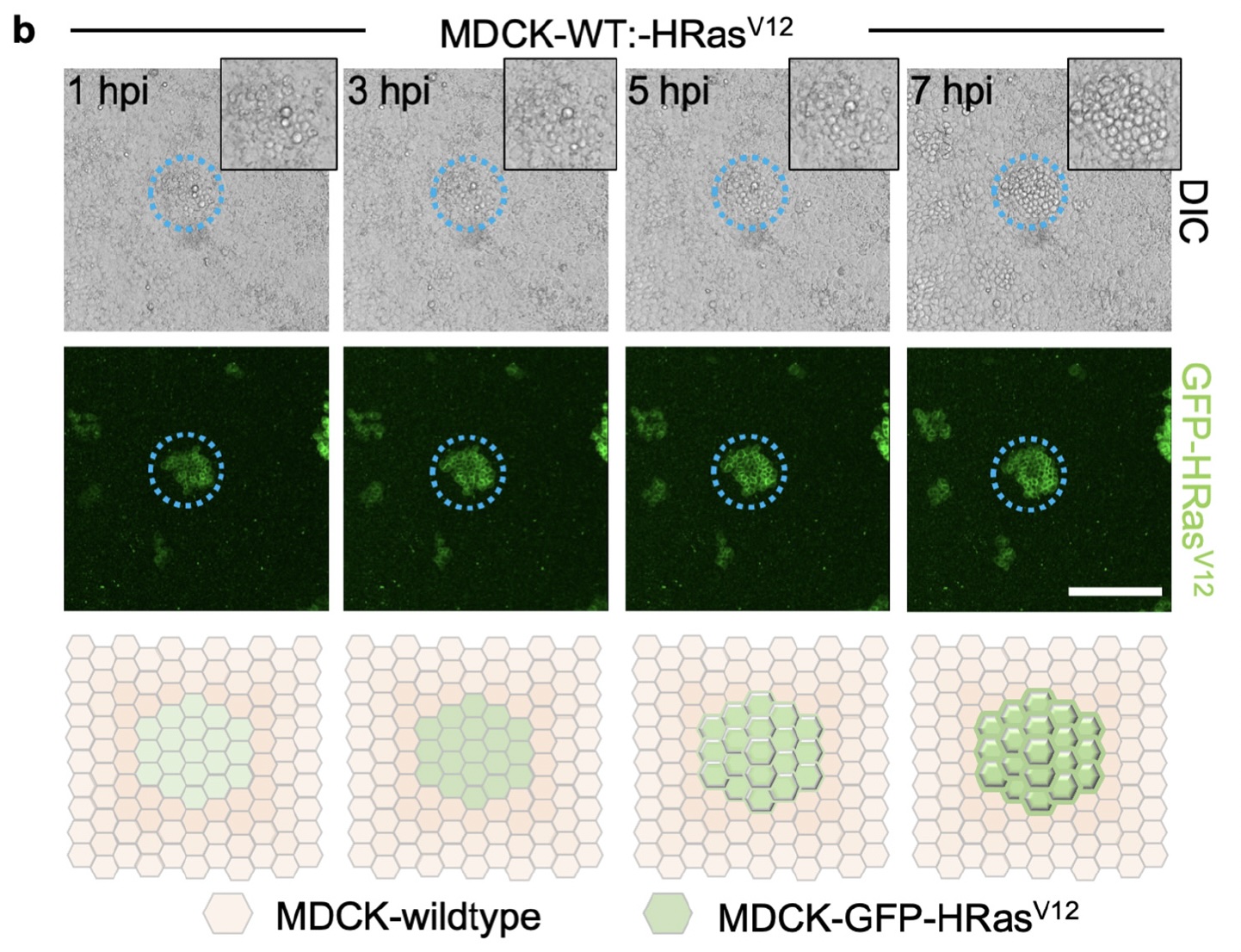
Mechanical imbalance between normal and cancer cells
Related Publication:
  • Gupta, P., Kayal, S., Tanimura, N., Pothapragada, S.P., Senapati, H.K., Devendran, P., Fujita, Y., Bi, D., & Das, T. “Mechanical imbalance between normal and transformed cells drives epithelial homeostasis through cell competition.” eLife (2025). DOI
Rigid Tumors Contain Soft Cancer Cells

In collaboration with the group of Prof. Josef Käs

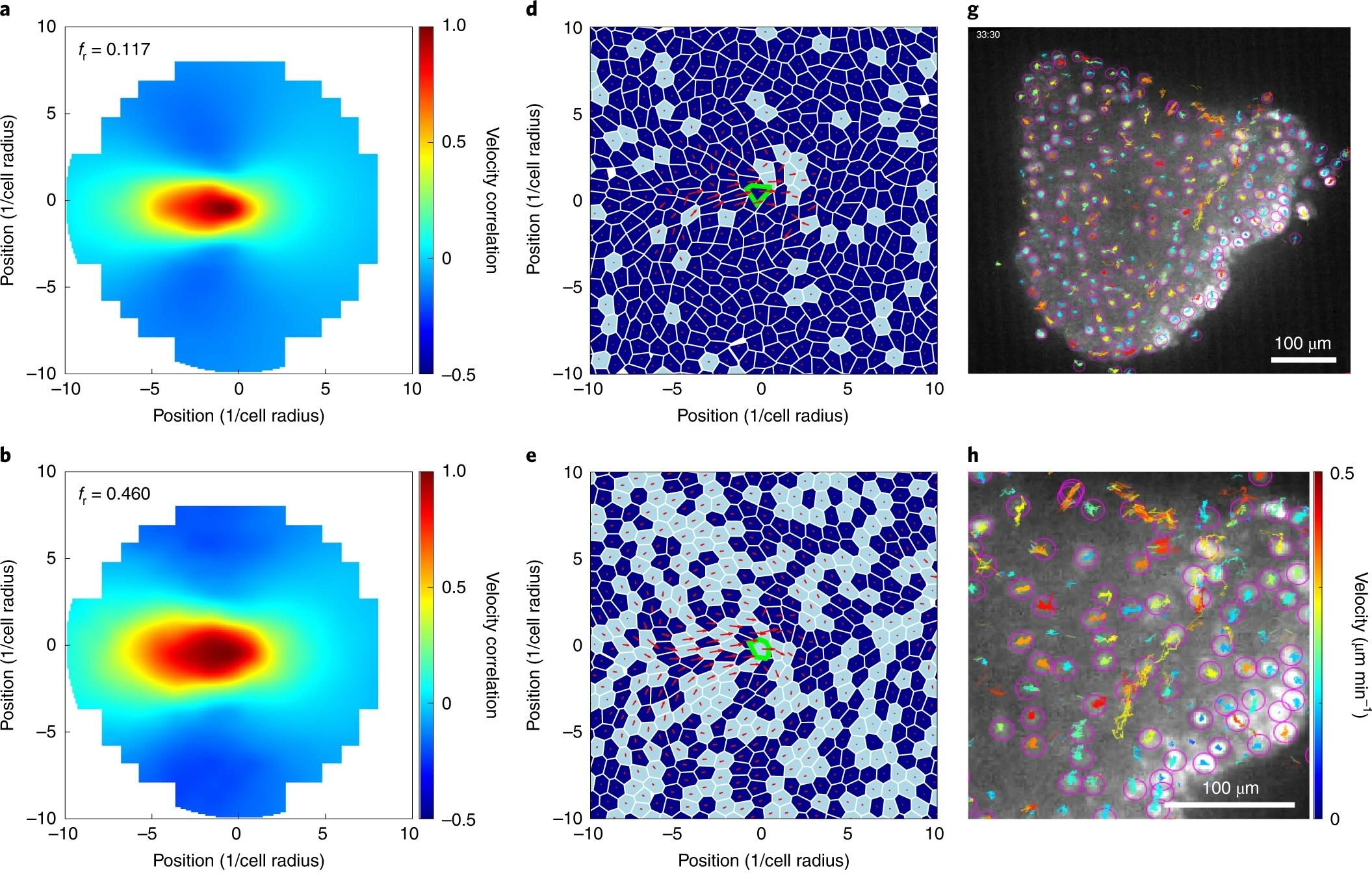
Palpation relies on the fact that solid breast tumors are stiffer than surrounding tissue, yet cancer cells themselves often soften, which might help them move through dense tissue. This raises two possibilities: either cancer cells soften as they adapt to their environment, or soft cancer cells already exist within a rigid tumor, enabling their mobility. Our research on primary tumor samples from breast and cervix cancer patients reveals that tumors are mechanically heterogeneous, with a wide range of stiffness from very rigid to softer than healthy tissue. We found that stiff cell clusters are surrounded by softer cells, and both jammed (immobile) and unjammed (motile) areas coexist within the tumors. Despite this variability, cancer cell clusters maintain a solid-like structure with a finite elastic modulus, providing mechanical stability. These findings help explain how tumors can be both rigid and contain motile cancer cells, contributing to our understanding of cancer progression.

Rigid tumors contain soft cancer cells - mechanical heterogeneity in tumors
Related Publications:
  • Fuhs, T., et al. “Rigid tumours contain soft cancer cells.” Nature Physics 18(12):1510–1519 (2022). DOI
  • Li, X., Das, A., & Bi, D. “Mechanical Heterogeneity in Tissues Promotes Rigidity and Controls Cellular Invasion.” Physical Review Letters 123:058101 (2019). DOI

Compressive Stress and Matrix Modulation: Key Factors in Cancer Unjamming and Invasion

In collaboration with the group of Prof. Allen Liu

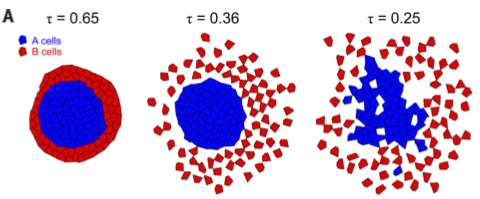
In growing tumors, uncontrolled cell proliferation in confined spaces generates substantial compressive stress — but how this stress drives tissue fluidization has been poorly understood. Working with dense, mechanically stressed monolayers, we find that compression has strikingly different effects depending on cell type: benign cells arrest, while cancer cells become more migratory. The key mediator is cadherin-dependent cell-cell adhesion, which drives unjamming independently of the epithelial-to-mesenchymal transition — establishing that mechanical stress and adhesion remodeling, not EMT, are the dominant drivers here. Traction force microscopy adds further nuance: compression suppresses traction forces throughout the bulk monolayer, yet cancer cells at the leading edge sustain traction, pointing to a spatially heterogeneous interplay between adhesion and force generation that may be central to collective invasion in breast cancer.

Compressive stress drives unjamming in breast cancer cell migration
Related Publications:
  • Cai, G., et al. “Matrix confinement modulates 3D spheroid sorting and burst-like collective migration.” Acta Biomaterialia 179:192–206 (2024). DOI
  • Cai, G., et al. “Compressive stress drives adhesion-dependent unjamming transitions in breast cancer cell migration.” Frontiers in Cell and Developmental Biology 10:933042 (2022). DOI

Funding Support

Funding support logos